The Mid-Century Ranch Challenge in Eau Claire
Mid-century ranch homes are iconic fixtures throughout Eau Claire, representing a cherished era of American residential architecture. Built primarily between the 1940s and 1970s, these charming single-story homes feature open floor plans, efficient footprints, and a timeless appeal that keeps homeowners invested in their preservation and improvement. However, many of these beloved ranches were constructed with insulation standards that are woefully inadequate by today's energy efficiency benchmarks.
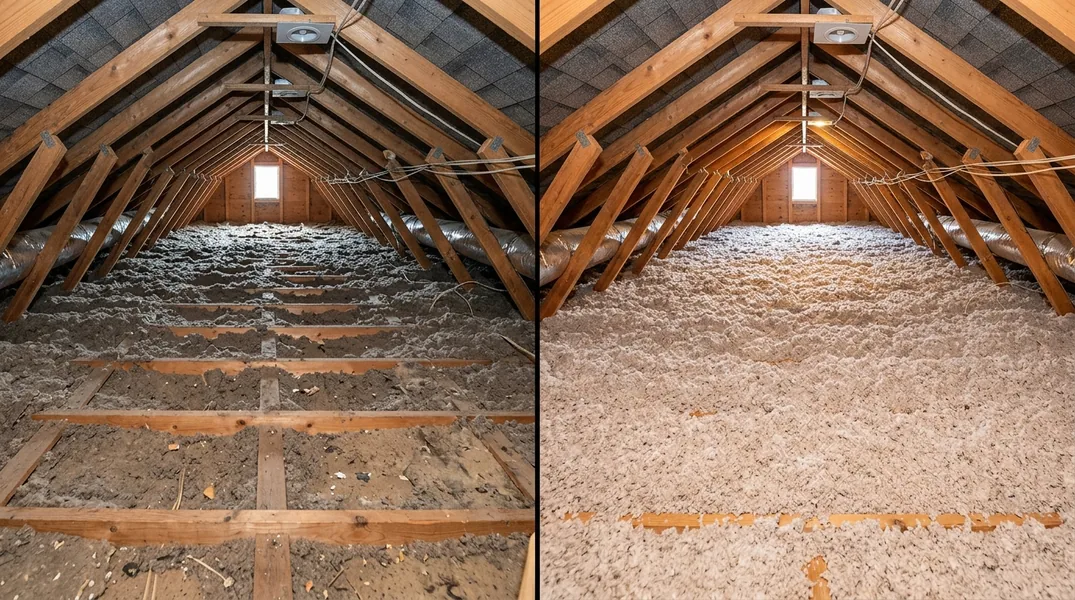
The original insulation in most mid-century ranches consists of minimal fiberglass batts or, in some cases, loose fill materials that have settled and compressed over decades. The attics in these homes were often built with irregular joist spacing, hidden gaps around penetrations, and structural quirks that make traditional insulation methods ineffective. When you add Wisconsin's harsh winters and variable humidity, the result is significant energy loss, uncomfortable temperature swings, and mounting utility bills. Homeowners in Eau Claire are increasingly recognizing that their charming ranch homes need modern insulation solutions to perform like contemporary homes.
Spray Foam vs Blown In Insulation: Why Modern Ranches Need Better Solutions
When comparing spray foam vs blown in insulation, the differences become immediately apparent when you examine how each material handles the unique geometry of a mid-century attic. Blown-in insulation, whether cellulose or fiberglass, relies on gravity and settling to fill spaces. It works reasonably well in simple, open attics with uniform joist spacing, but it struggles with the architectural reality of older homes. Gaps around electrical wiring, HVAC ducts, and irregular framing go unfilled, creating thermal bridges where warm air escapes during winter and conditioned air leaks out in summer.
Attic Spray Foam Insulation expands and conforms to every cavity, crack, and gap in your attic space. Unlike blown-in materials that can shift and settle, spray foam creates an air-tight seal that remains stable for decades. This means no hidden voids, no thermal bridging, and no performance degradation over time. For mid-century ranches with their characteristic structural imperfections, spray foam addresses the root cause of energy loss rather than merely covering symptoms with another layer of traditional insulation.
Spray Foam vs Fiberglass: The Performance Advantage in Wisconsin Winters
Fiberglass batts have been the standard for residential insulation since the mid-20th century, and they remain popular because of their low upfront cost. However, when you evaluate spray foam vs fiberglass in a direct comparison, the performance gap becomes significant. Fiberglass batts achieve their R-value rating only when installed perfectly with no gaps, no compression, and no air movement around the material. In practice, especially in older homes with uneven framing and irregular spaces, achieving that perfect installation is nearly impossible. Additionally, fiberglass does nothing to seal air leaks. You can have R-30 fiberglass in your attic while still losing conditioned air through gaps around penetrations and structural seams.
Spray foam delivers both insulation and air sealing in a single application. Closed Cell Spray Foam Insulation provides superior R-value per inch (approximately R-6 to R-7 per inch) compared to fiberglass (R-3.2 to R-3.8 per inch), meaning you achieve better thermal performance in less space. For homeowners with low-clearance attics or those seeking to maximize insulation effectiveness, this advantage is substantial. Wisconsin's temperature extremes make this performance difference especially valuable, as every percentage point of improved efficiency translates directly to lower heating and cooling costs throughout the year.
Best Insulation for Attic: Why Spray Foam Stands Apart
Determining the best insulation for attic spaces requires looking beyond simple R-value comparisons and considering the complete performance picture. The best insulation must achieve high thermal resistance, create an air-tight barrier, resist settling and degradation, and adapt to the unique geometry of your specific home. For mid-century ranch homes with their particular construction challenges, spray foam checks all these boxes in ways that traditional materials cannot match.
Spray foam also provides secondary benefits that other insulation types cannot offer. When properly installed, it strengthens the attic structure by adding rigidity to roof decking. It resists moisture intrusion and mold growth, a significant concern in Wisconsin's humid summers. It eliminates the settling problems that plague blown-in cellulose and fiberglass over time, meaning your insulation performance remains consistent for 20, 30, or even 40 years. For homeowners committed to long-term energy efficiency and comfort, these advantages justify the investment in spray foam as the best choice for attic insulation.
Spray Foam vs Cellulose: Durability and Performance Comparison
Cellulose is a popular blown-in option that appeals to environmentally conscious homeowners because it's made from recycled paper. When comparing spray foam vs cellulose, both materials have merit, but they serve different priorities. Cellulose achieves a reasonable R-value (approximately R-3.6 per inch) and is less expensive than spray foam. However, cellulose is highly susceptible to settling, which means the R-value you achieve on installation day will degrade by 10 to 20 percent within the first few years. Cellulose also absorbs moisture, which can lead to mold growth and structural damage in humid climates like Wisconsin.
Spray foam maintains its R-value indefinitely without settling or moisture absorption concerns. While the initial pricing for spray foam is higher than cellulose, the long-term value proposition strongly favors spray foam. A mid-century ranch home treated with spray foam will maintain superior energy efficiency throughout the homeowner's tenure, reducing the likelihood of needing re-insulation in 15 or 20 years. For homeowners planning to stay in their homes long-term or those concerned about resale value, spray foam represents the more durable and ultimately more economical choice.
Attic Spray Foam Insulation Cost in Eau Claire: What to Budget
Understanding the investment required for Attic Spray Foam Insulation is important for homeowners evaluating their options. The pricing for spray foam typically ranges from $1.50 to $3.50 per board foot, depending on the type of foam, attic accessibility, existing insulation removal requirements, and local market conditions. For a typical mid-century ranch with a 1,200 to 1,500 square foot attic, homeowners should budget between $3,000 and $8,000 for a complete spray foam installation. This is substantially more than blown-in insulation or fiberglass batts, which might cost $1,000 to $3,000 for the same space.
However, this higher upfront cost must be evaluated against the long-term savings and performance benefits. Spray foam's superior insulation value, air-sealing capability, and durability mean that homeowners typically recoup their investment through reduced energy bills within 5 to 10 years. Additionally, improved home comfort, eliminated drafts, and enhanced resale value add intangible benefits that extend beyond simple cost calculations. If you're considering spray foam for your mid-century ranch in Eau Claire, reach out to Eau Claire Spray Foam Insulation for a free estimate. Our team can assess your specific attic conditions and provide transparent pricing based on your home's actual needs.
Getting Started with Attic Spray Foam Insulation Near Me
If you own a mid-century ranch home in Eau Claire and recognize that your current insulation is underperforming, the next step is connecting with qualified spray foam professionals. Eau Claire Spray Foam Insulation serves homeowners throughout the region with expert installation, honest assessment, and commitment to long-term customer satisfaction. Our team understands the unique characteristics of older homes and the specific challenges that Wisconsin's climate presents. We're equipped to handle everything from initial attic inspection through final installation, ensuring that your spray foam application is executed to the highest standards.
The process begins with a comprehensive attic evaluation where we assess your current insulation condition, identify air leaks and thermal weak points, and determine whether Closed Cell Spray Foam Insulation or Open Cell Spray Foam Insulation is the best fit for your specific situation. We'll discuss your energy efficiency goals, budget parameters, and timeline. Then we'll provide a detailed estimate with no hidden costs or surprise charges. If you're ready to transform your mid-century ranch into an energy-efficient, comfortable home, call us today at (534) 444-6239 or visit our website to request your free estimate. Your path to superior attic insulation starts with a single conversation.
Looking for a professional spray foam insulation contractor in Eau Claire? Eau Claire Spray Foam Insulation responds fast for all your spray foam insulation needs.
Get a Free Quote