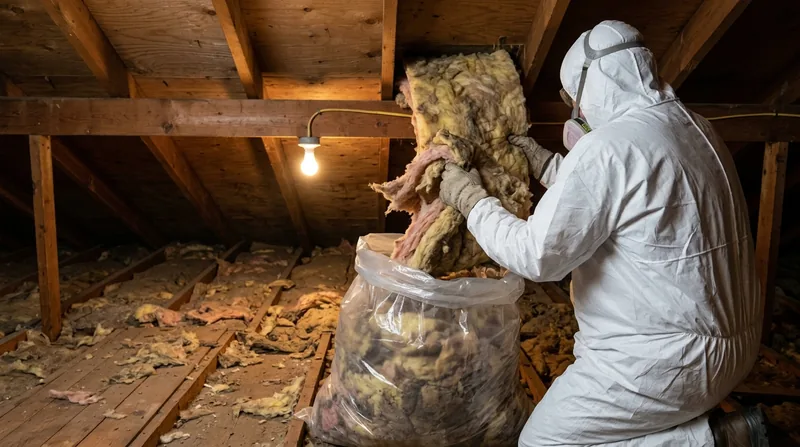




Insulation Removal in Eau Claire is often the first step toward a properly functioning attic, crawl space, or wall cavity. Homes across Eau Claire, from the early 1900s bungalows near downtown and the Third Ward to the mid-century ranches scattered across the city and into Altoona and Lake Hallie, frequently carry decades-old insulation that has settled, compressed, or failed. In this cold IECC zone 6A climate, where the Chippewa River's winter chill drives stack effect moisture upward through attics and where rim joists at the foundation top plate are a chronic weak point, damaged insulation cannot do its job. Removing old material before installing spray foam or blown-in replacement ensures the substrate is clean, dry, and ready to perform. We remove old insulation from attics, walls, and crawl spaces, and we help homeowners understand what needs to come out before new protection goes in.
Why Insulation Removal Matters in Eau Claire Homes
Eau Claire's housing stock tells the story. Older attics in the Third Ward and downtown core were often blown with cellulose or fiberglass decades ago. Mid-century houses across Eau Claire and Chippewa Falls sometimes hide unevenly distributed fiberglass batts or mineral wool that has sagged and lost contact with the framing. Crawl spaces under basements collect settled material, moisture damage, and debris. When that insulation fails, it traps moisture against wood framing, reduces R-value, and can harbor conditions that compromise the structure. Removing failed insulation is not cosmetic; it is the foundation of any retrofit that works.
- Old cellulose and fiberglass in attics settle and compress, losing R-value over decades.
- Moisture-damaged insulation in crawl spaces and rim joists can rot wood framing and encourage mold growth.
- Uneven or poorly installed material leaves gaps and thermal bridges that drive ice dams in winter.
- Removing the old material exposes the actual framing condition so you know what you are starting with.
- A clean substrate ensures new spray foam or blown-in insulation bonds properly and performs to spec.
Removing damaged insulation is the honest first step before any retrofit, and it is the step that separates a lasting repair from a cosmetic patch.
Local example: A Third Ward home built in 1925 with a full basement and an attic that had been blown with cellulose in 1995 showed settling and moisture staining along the rim joist. Removing the old material revealed rot in the band joist and allowed proper sealing and spray foam installation that stopped the winter air leak and the ice dam pattern that had plagued the home for five years.
For more information on what happens after removal, see our attic spray foam insulation and crawl space spray foam insulation services.
Wisconsin contractors working in Eau Claire should familiarize themselves with local building department rules on debris disposal and any asbestos or vermiculite concerns. The City of Eau Claire does not regulate insulation removal as a separate license, but permits and inspection requirements apply to any work that affects building envelope performance. For guidance specific to your address, contact the City of Eau Claire Building Inspection Division.
How Insulation Removal Works in Eau Claire Attics and Crawl Spaces
Removal is straightforward in principle but requires care in execution. We access the attic or crawl space, identify what material is present, assess its condition, and remove it in a controlled manner. The goal is to protect the home from dust and debris during the work, dispose of the old material properly, and leave a clean surface ready for the next phase. In Eau Claire homes with tight attic access or basement crawl spaces with low headroom, the work takes planning and the right equipment.
- We set up containment and mechanical ventilation to manage dust and odor during removal.
- Old material is bagged, removed from the home, and disposed of according to local waste regulations.
- We inspect framing, electrical, plumbing, and roof sheathing as material comes out to identify damage or hazards.
- Once removal is complete, we document the condition and prepare a scope for the next phase, whether spray foam, blown-in, or air sealing.
- We work around active utilities, HVAC ducts, and any active pest activity, and refer specialized concerns to licensed trades.
The removal process is the foundation for every successful retrofit, and rushing it or cutting corners shows up in the next phase of work.
Real scenario: A ranch-style home in Lake Hallie had a vented attic with 1970s fiberglass batts over the rim joist area and blown-in cellulose in the main attic space. Removal took a full day because the batts were nailed down and the cellulose had compressed into the rim joist cavity. Once cleared, we found the rim joist was dry and sound, and we proceeded with closed cell spray foam to seal and insulate that critical thermal break.
After removal, most Eau Claire homeowners move to insulation replacement and re-insulation or air sealing to complete the envelope upgrade.
Insulation Removal Methods and Approaches
| Approach | Description | Best for |
|---|---|---|
| Attic Blown-In Removal | Cellulose or fiberglass blown into attic cavities is vacuumed out using a truck-mounted collection system with containment. | Full attic cleanouts in Eau Claire homes where the material is loose and has settled over decades. |
| Batt and Roll Removal | Fiberglass or mineral wool batts nailed or stapled to framing are hand-removed, bagged, and disposed of. | Rim joists, rim cavities, and wall cavities in mid-century houses where batts are the original or previous insulation. |
| Crawl Space Insulation Removal | Damaged or moldy insulation is removed from floor cavities and rim joists in basement crawl spaces, often in tight headroom. | Eau Claire basements where moisture and settlement have compromised insulation and framing is at risk. |
| Wall Cavity Removal | Blown-in or settled insulation is carefully removed from exterior wall cavities without disturbing the wall surface. | Retrofit jobs where injection foam or blown-in will replace old material in closed walls. |
Insulation Removal Cost in Eau Claire: What to Expect
Cost for insulation removal in Eau Claire depends on the volume of material, the access difficulty, and the disposal method. A typical attic cleanout in a 1,500-square-foot home with settled blown-in material starts around $950 to $1,200. Crawl spaces and rim joists often run $600 to $1,000 because the volume is smaller but access is tighter. Wall cavity removal for a retrofit job can range from $800 to $2,000 depending on how many cavities and how much material is present. The biggest variable is whether the old insulation is wet, contaminated, or hazardous; if so, specialized disposal adds cost and we will tell you upfront.
Getting 2 to 3 estimates is smart because removal scope can vary based on how thoroughly the inspector looks at the framing condition and what gets flagged for attention. Our estimates include a walk-through, a photo record, and a clear line item for removal so you know what you are paying for. Visit our pricing page for a full breakdown and call (534) 444-6239 for a free estimate.
Most removal jobs in Eau Claire and the surrounding area run 1 to 2 days depending on attic size and access. Crawl spaces under tight basements can take longer. We include hauling and disposal in our estimate, so there are no surprise bills when the work is done.
Insulation Removal Near Me: What Eau Claire Homeowners Should Know When Hiring a Contractor
Finding a trustworthy contractor for insulation removal in Eau Claire means looking beyond the price quote. The trade has rig-and-run crews that spray an attic in an afternoon with no ventilation and promise immediate re-entry, and it has national franchises with call centers and rotating crews. A local shop with a local address and accountability is different. Ask any contractor for references from homes in Eau Claire, Lake Hallie, or Chippewa Falls, and call those homeowners. Verify that the contractor is fully insured and ask to see the certificate. Confirm that they understand local permitting rules for your specific address, because rules vary from city to city across Greater Eau Claire.
- Request a written estimate that lists the material type, volume, method, and disposal plan so you know what you are paying for.
- Ask about mechanical ventilation during any removal work and the re-entry window before the space is safe to occupy.
- Verify that the contractor carries liability insurance and ask for a copy of the certificate naming your address as the job site.
- Understand any HOA or local permit requirements that apply to your home before work begins.
- Get multiple estimates and compare scope, not just price, because a low quote sometimes means cutting corners on containment or disposal.
A contractor who can explain why removal matters, what condition your framing is in, and what the next phase should be is the one worth hiring. Call us at (534) 444-6239 or visit our contact page to schedule a free estimate and see the difference a local shop makes.
Insulation Removal in Eau Claire: Pricing Guide
| Service | Price | Details |
|---|---|---|
| Attic Blown-In Removal | Starting at $950 | Full attic cleanout including vacuum removal, bagging, and disposal of settled cellulose or fiberglass material |
| Rim Joist and Batt Removal | Starting at $600 | Hand removal of fiberglass batts and mineral wool from rim joists and foundation cavities in basement crawl spaces |
| Wall Cavity Removal | Starting at $800 | Removal of blown-in or settled insulation from closed exterior wall cavities prior to injection foam retrofit |
| Full Crawl Space Clearout | On estimate | Large-volume removal from basement crawl spaces requires on-site inspection to assess access, moisture, and contamination |
| Travel and Haul | Included | No separate mileage fee or travel charge in Eau Claire and surrounding service area |
| Free Estimate | No charge | Written estimate with materials list, method, and disposal plan provided within 24 hours of your call |
Indicative pricing, the exact cost depends on square footage, finish, and site access. Free personalized estimate within 24h at (534) 444-6239.


